
regime-pulse
regime-pulse
regime-pulse
regime-pulse
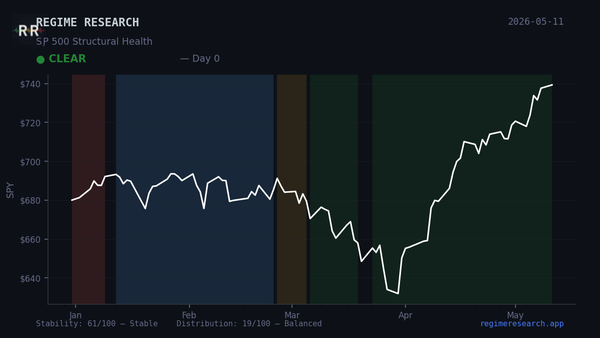
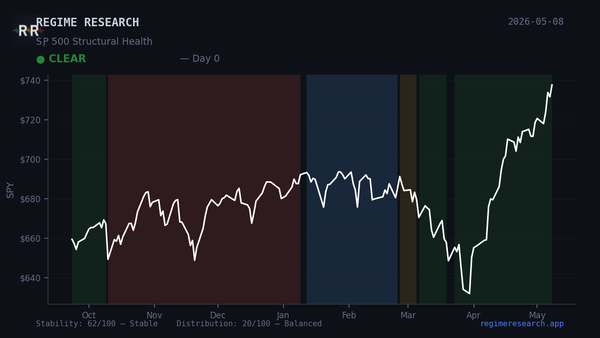
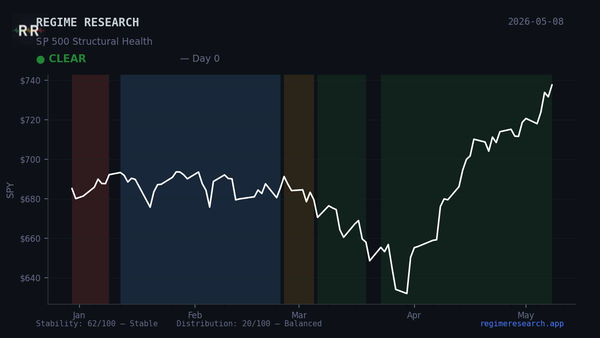
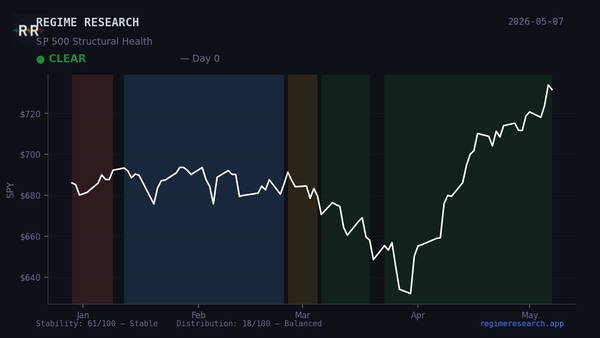
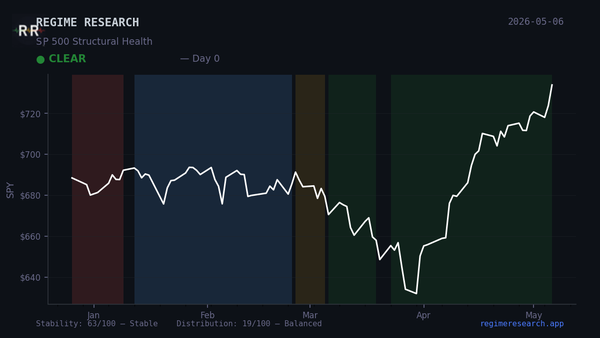
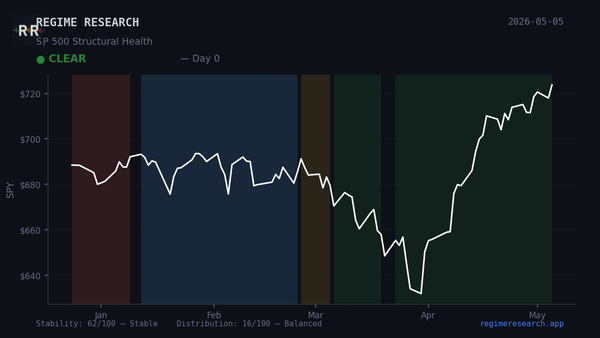
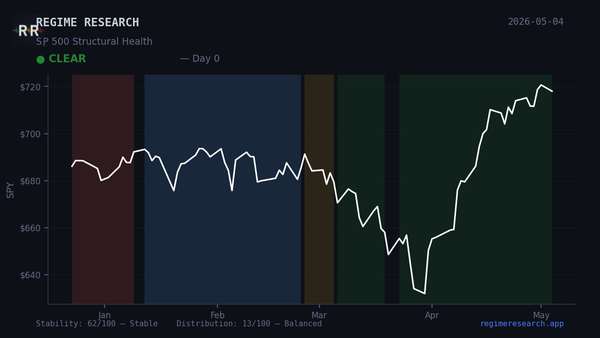
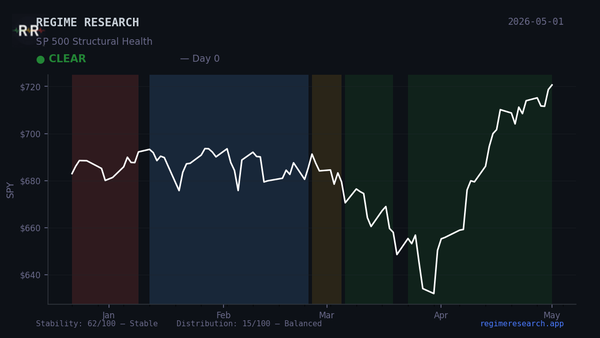
The detection system maintained a consistent RECOVERING classification throughout the trading week, marking 53 consecutive days in this regime state. The stability channel and distribution channel readings supported this classification across all five sessions, with no transitions observed between regime states. Market conditions during the week showed notable price movement,
regime-pulse
regime-pulse
regime-pulse
regime-pulse
regime-pulse
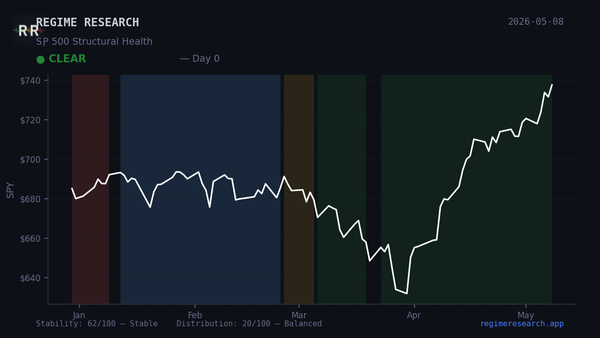
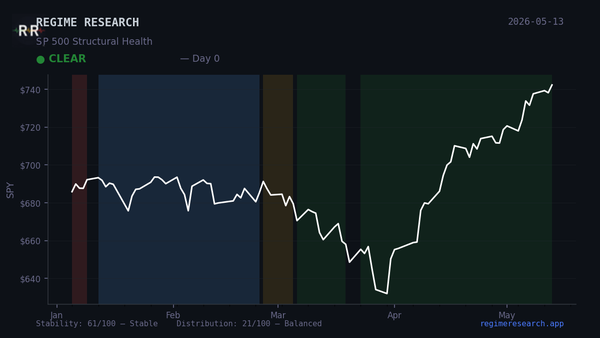
The detection engine maintained a consistent RECOVERING classification throughout the trading week as markets continued processing the structural conditions that emerged during the October 2025 episode. The system observed no state transitions across the five-day period, with both detection channels sustaining their current assessment of market dynamics. The S&
regime-pulse
regime-pulse
Every backtested system looks good on paper. The parameters were chosen because they worked on historical data. The events were selected because the system detected them. The presentation was designed to be persuasive. We know this, and so should you. That is why we are publishing our success criteria before
research
Over 28 years, the system entered ALERT 43 times. Of those, 36 were followed by a decline of 5% or more within 60 trading days — an 84% hit rate. Seven were not.
Research Notes
One of the more humbling results in our research came from what seemed like an obviously good idea: if critical transitions theory detects structural instability in equity returns, shouldn't it work even better on credit spreads? Credit markets are where financial stress shows up first. Bond investors are